




If you’ve noticed a sudden surge of intense, negative emotions right as your milk lets down, you’re not alone. D-MER (dysphoric milk ejection reflex) is a physical condition where breastfeeding or pumping parents experience a brief but powerful wave of feelings like sadness, dread, anxiety, or irritability in the moments just before milk release. This isn’t a psychological response, it’s hormone-driven. These shifts can feel abrupt and out of place, especially since they often come without a clear emotional trigger. They are linked to a rapid drop in dopamine, a neurotransmitter involved in mood regulation.
For many parents, this can feel deeply distressing and confusing, particularly when it doesn’t line up with expectations of feeding as something calm, connected, or even enjoyable. The intensity, timing, and repeated nature of these emotions can make the experience difficult to make sense of on your own. Learning that this experience has a name can bring a sense of relief, helping it feel less isolating, and making it clearer that this isn’t something you’re doing wrong or a reflection of you as a parent.
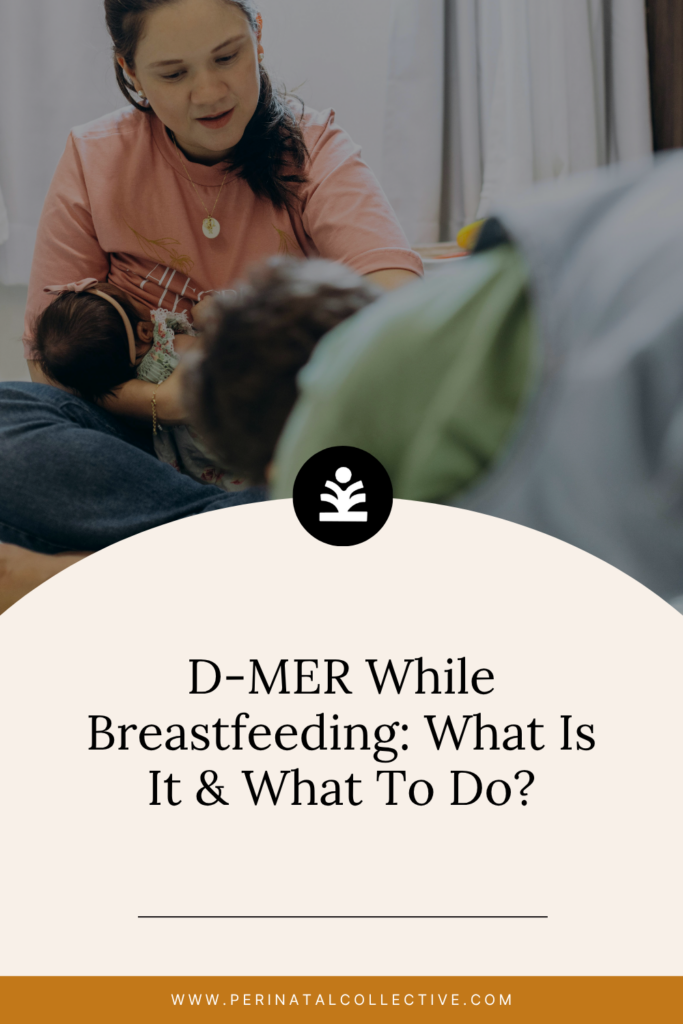
These emotional shifts can come on quickly and without much warning. It’s common to find yourself wondering what’s going on, or to worry that it means something about your connection with your baby or how feeding is going.
D = Dysphoric (uneasy, dissatisfied or restless)
MER = Milk ejection reflex (the “let-down” reflex)
Most people haven’t heard of D-MER until they’re in the middle of experiencing it. Without a name for it, it can feel isolating or even a bit alarming.
Parents often describe feelings like:
- An overwhelming sense of guilt, shame, or worthlessness
- A sudden sense of doom or despair
- Feeling like they want to crawl out of their skin
- Feeling homesick
- A strong urge to hide or pull away
- A hollow or sinking feeling in the stomach
- Nausea
- Anxiety
- Emptiness
- Rage
These feelings tend to come on right before a let-down, often just before milk starts to flow, and usually pass within 1–5 minutes. As the milk begins to release, the intensity often fades. This can happen more than once in a single feeding or pumping session.
Because it happens over and over, it can start to create a sense of dread around feeding. Some parents notice they’re avoiding or really not enjoying breastfeeding, without fully understanding why. It can also bring up worries about whether something more serious is going on, or whether these feelings mean something is wrong. D-MER itself isn’t considered dangerous, even though it can feel very intense in the moment.
For some parents, these symptoms become difficult enough that they consider stopping breastfeeding, which speaks to how impactful this experience can be when it isn’t understood or supported.
Postpartum care doesn’t always include information about D-MER. Bringing it into conversations about postpartum mental health could help more parents recognize what’s happening and feel less alone in it.
What Is D-MER While Breastfeeding?
D-MER, or dysphoric milk ejection reflex, is a condition that some people experience during lactation, particularly around milk letdown. It is not about your feelings toward your baby, and it is not a reflection of your feeding relationship.
Instead, D-MER is connected to the body’s internal processes during lactation. It may affect up to 25% of lactating folk, which is similar to the incidence of postpartum depression. Because the emotional experience can feel intense, it’s often mistaken for a mood concern.
At the same time, D-MER isn’t widely talked about or well researched yet. A lot of parents only come across it after trying to figure out their symptoms on their own. That lack of awareness can make it feel more confusing than it needs to be.
What Causes D-MER?
D-MER is thought to be linked to a quick drop in dopamine that happens during milk letdown. Dopamine helps regulate mood, so shifts in it can affect how you feel emotionally.
When your body is getting ready to release milk, prolactin increases. For that to happen, dopamine levels decrease. The current understanding is that in people with D-MER, that drop might happen a bit too quickly or a bit too strongly, which can trigger those intense feelings.
This is a hormonal, reflexive response. It isn’t psychological, it isn’t a trauma response, and it isn’t something you’re doing or causing. Once dopamine levels settle again, the feelings tend to pass just as quickly. For many people, understanding this helps take some of the fear out of the experience.
Common D-MER Symptoms
D-MER symptoms usually show up as emotional and physical sensations right before or during letdown. This might look like sadness, anxiety, irritability, dread, or that hollow or sinking feeling in your stomach.
One of the most noticeable things about D-MER is how patterned it is. The feelings show up just before letdown, last briefly, and then ease once milk starts to flow. This can repeat multiple times in one feeding session.
Some parents find that the intensity shifts depending on what else is going on, like stress, feeling alone, conflict, or lack of support. These don’t cause D-MER, but they can make it feel harder to cope with.
It’s also important to know that D-MER doesn’t affect your milk supply or the quality of your milk.
How Do I Know If I Have D-MER?
For many people, it comes down to noticing the timing. The emotional wave starts just before letdown and ends shortly after, often within 30 seconds to a couple of minutes.
Outside of those moments, you may feel completely like yourself. That’s one of the key differences between D-MER and mood disorders, which tend to be more ongoing.
There isn’t a specific test for D-MER. A healthcare provider may look at your symptoms and patterns to help make sense of what’s happening. A lot of people figure it out on their own first, often by searching their symptoms.
It can sometimes help to track what you’re noticing in a journal, when it starts, how long it lasts, and how it resolves.
Across different experiences, there’s usually the same pattern: a wave of dysphoria before letdown, followed by a quick return to baseline. This can happen during nursing, pumping, or even spontaneous letdowns.
Some parents notice very intense thoughts during those brief moments. These tend to pass quickly along with the physical reflex, but they can still feel unsettling.
A key part of D-MER is that outside of those short windows, you feel okay. While it’s possible to experience both D-MER and postpartum depression, they’re not the same. D-MER is brief and tied specifically to letdown, while depression is more persistent. Once people start to recognize the pattern, it can make the experience feel a bit more understandable.
D-MER When Pumping
D-MER can happen with pumping as well as direct breastfeeding. It’s connected to the letdown reflex itself, not how you’re feeding.
When feeding starts, whether that’s a baby latching or a pump turning on, your body releases oxytocin to trigger letdown. That process also lowers dopamine. For some people, that drop happens very quickly, which can lead to D-MER symptoms.
So even if you’re exclusively pumping, you might still notice the same brief, cyclical wave of emotions, like sadness, dread, anxiety, or irritability, tied to letdown.
What Is the Difference Between Breastfeeding Aversion and D-MER?
D-MER and breastfeeding aversion are different, though they can overlap.
D-MER is a quick, hormone-driven response that happens right before or during letdown and then passes. The feelings are often described as dread, sadness, or a sinking feeling.
Breastfeeding aversion (also called BAA) tends to last throughout the feeding session. It often shows up as anger, irritation, agitation, or a strong urge to unlatch. Some people also notice physical sensations like itching.
The biggest difference is how long it lasts. D-MER is brief and cyclical. Aversion continues until the feeding stops.
Some parents experience both at the same time, but they are considered different experiences.
How Do I Get Rid of D-MER?
There isn’t a quick or simple fix for D-MER, but many people find it becomes more manageable once they understand what it is. Just having a name for it can shift how it feels.
Some people also notice that it changes over time. For some, it lessens as feeding evolves. For others, it stays fairly consistent. Because it’s tied to hormones, changes in feeding patterns or overall recovery can influence how it shows up.
Things that some people find helpful include:
– Supporting the nervous system (breathing, music, mindfulness, etc.)
– Gentle distraction during feeding (reading, eating)
– Reaching out for support (partner, friends, lactation consultant, doula, therapist)
– Skin-to-skin contact
– Paying attention to factors like stress, hydration, and caffeine
– Prioritizing rest where possible
– Connecting with others who understand, including peer support groups
– Adjusting feeding routines or positions
– Reminding yourself: “This feeling can come with letdown, and it tends to pass. This is a temporary wave, not a permanent state.”
These don’t remove D-MER entirely, but they can make it feel more manageable.
When D-MER Feels Overwhelming or Starts Affecting Mental Health
For some parents, D-MER can start to feel like a lot, especially alongside stress, anxiety, depression, or feeding challenges. That doesn’t mean something is wrong with you, but it can mean you might need more support.
There can also be pressure around feeding choices. If breastfeeding feels important to you, having to consider stopping because of D-MER can bring up a lot of emotion, including grief or anger. That makes sense. And if you’re navigating D-MER while continuing to feed, you may be holding a lot of complex, conflicting feelings. You don’t have to carry that alone, your experience deserves support and space to be processed.
For many parents, this experience can also come with a sense of disappointment or a feeling that the feeding journey isn’t unfolding the way you had hoped. You might have imagined something more easeful, more connected, or more aligned with what you wanted, and it can be really hard when reality doesn’t match that. There can be sadness in that, and it deserves space and care.
At the same time, self-critical thoughts can creep in and make the experience feel heavier. Support, rest, and small forms of comfort during feeding can sometimes help ease some of that intensity.
It’s also very common to worry about bonding. D-MER does not prevent you from bonding with your baby. Many parents continue to build strong, connected relationships while navigating this.
It can be especially helpful to talk to someone who understands D-MER and the impact it can have, not just physically, but emotionally. There are often a lot of complex, unresolved feelings tied into this experience, and you deserve support in making sense of them. You don’t have to sit with this alone.
If feeding is consistently feeling distressing, or if you want support in unpacking your feeding journey, it might help to reach out. The Perinatal Collective offers support for parents navigating experiences like this.





+ show Comments
- Hide Comments
add a comment