




Introduction
It can feel confusing and unsettling to notice emotional changes after weaning. This might be happening as you fully stop breastfeeding, or even as you begin to space out feeds, drop night feeds, or gradually reduce how often you nurse. Even these smaller shifts can come with noticeable hormonal and emotional changes.
For many breastfeeding parents, weaning is not just a practical transition. It can also be deeply emotional. You may be closing a chapter that held a lot of closeness and connection with your baby. Your relationship with your body, your baby, and your sense of self may all be shifting at once. Some people feel ready, others feel hesitant, and many feel a mix of relief and sadness at the same time.
It’s common to expect a sense of closure or relief after stopping breastfeeding, and then feel caught off guard by anxiety, low mood, irritability, or a general sense of feeling off. This period can also be reflective. You might find yourself thinking about your feeding journey, your baby growing, and what this next stage of parenthood will look like.
Weird symptoms after stopping breastfeeding are more common than many people realize, yet they are rarely talked about. Post-weaning emotional changes, sometimes referred to as post-weaning baby blues, are often missing from typical conversations about women’s health.
You may also see different language used when talking about infant feeding. Chestfeeding or bodyfeeding are terms that are becoming more commonly used, particularly by trans-masculine or non-binary parents, to describe feeding their baby from their body. In this post, we primarily use the term breastfeeding, and we also support the use of chestfeeding or bodyfeeding as part of ensuring all parents feel represented and included in these conversations.
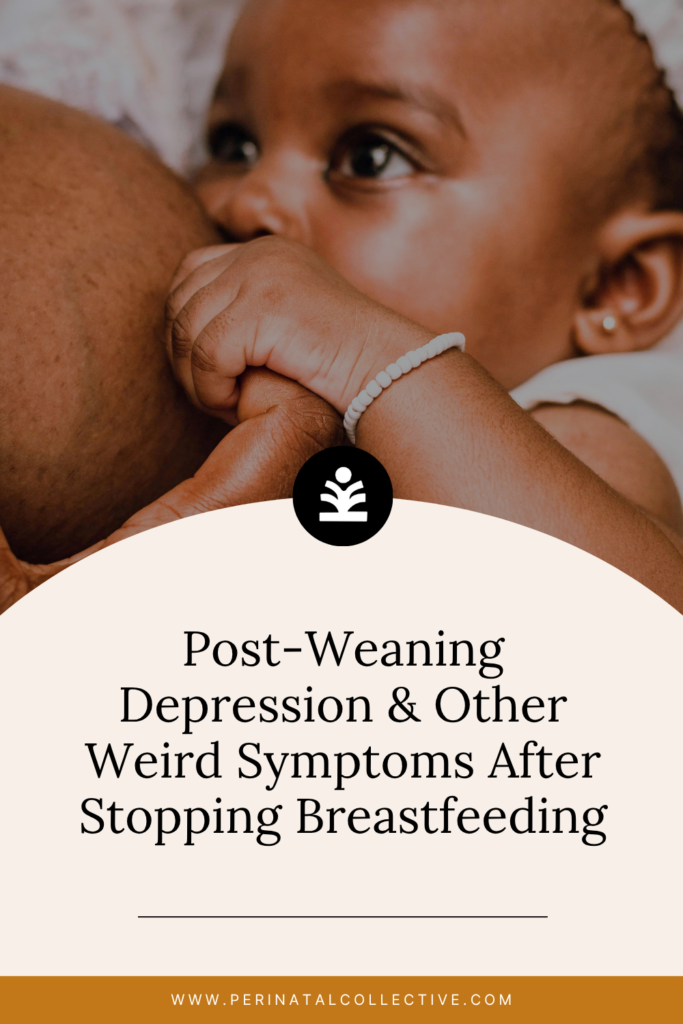
What Happens to Your Body After You Stop Breastfeeding
When breastfeeding slows down or ends, your body goes through a shift in key hormones, particularly prolactin and oxytocin.
Oxytocin, which is released during breastfeeding, is often associated with feelings of calm and connection. Prolactin supports milk production and is also linked to a sense of relaxation and caregiving. As breastfeeding changes, these hormone levels adjust, sometimes quite quickly.
For some parents, this hormonal shift can feel like an emotional dip or a sense of internal change that’s hard to fully explain. You might feel more sensitive or more reactive.
These mood changes are physiological. They are part of how the body transitions out of breastfeeding. They are not a reflection of personal strength or how you are coping.
What is “Post-Weaning Depression”?
Post-weaning depression is a term used to describe a drop in mood that some parents experience after reducing or stopping breastfeeding.
When breastfeeding ends, the hormones that supported feelings of steadiness, calm, and connection begin to shift. For some, this can show up as low mood, irritability, tearfulness, anxiety, or a sense of feeling unlike themselves.
This does not happen to everyone, and it does not mean anything is “wrong.” It is a real, body-based transition that often overlaps with an emotional one. Weaning can also bring up thoughts about identity, closeness with your baby, and the ending of a meaningful chapter.
Post-weaning depression is often a temporary emotional dip that occurs as your body and nervous system adjust.
It’s often connected to weaning when:
- The mood shift begins during weaning or within days to weeks after stopping
- There is a noticeable drop, rather than a gradual buildup of stress
- You feel clearly different from your usual baseline
- The timing and experience align with both a hormonal and emotional transition
Alongside these changes, you might also feel wistful, overwhelmed, or aware of how quickly your baby is growing. There can be a sense of grief woven into the experience.
Post-weaning depression can look very similar to postpartum depression, with symptoms like low mood, anxiety, and irritability. The difference is in what’s driving it.
Postpartum depression is generally connected to the period after birth and the many changes that come with it. Post-weaning depression is specifically tied to the hormonal shifts and emotional meaning of ending the breastfeeding relationship.
In short: same feel, different timing and trigger.
Common Post-Weaning Symptoms
Weaning can come with a range of emotional and physical symptoms. Emotionally, many parents describe:
- Irritability
- Low mood or depression
- Mood swings
- Anxiety
- Weepiness
- Wistfulness or a sense of loss
There can also be physical symptoms, including:
- Headaches or migraines
- Breast discomfort
- Sleep disruption or insomnia
- Fatigue
- Changes in sex drive
- Changes in appetite
- Acne
- Night sweats
Some people describe these symptoms as feeling similar to hormonal shifts during the menstrual cycle, but more intense or longer lasting.
While physical symptoms can be part of the experience, the emotional changes are often what feel most noticeable and disorienting.
Why Weaning Can Trigger Grief
Stopping breastfeeding can represent the end of a chapter. It may shift how you experience closeness with your baby, especially if feeding has been a primary way of connecting physically and emotionally.
There can also be an identity shift. Breastfeeding can become a meaningful part of how you see yourself as a parent, and letting that go can bring up unexpected feelings.
It’s common for relief and sadness to exist at the same time. Even when weaning is planned or wanted, there can still be grief. When weaning is unplanned or happens earlier than expected, those feelings can be even more complex.
For some parents, weaning is closely tied to returning to work. Even when this decision makes sense practically, it can still feel forced or earlier than you would have chosen. Weaning can also happen sooner than expected for other reasons, such as medical concerns, a hospital stay, unexpected separation, supply changes, feeding challenges, or medications that are not compatible with breastfeeding. When the timing feels out of your control, this can bring up feelings of resentment, frustration, or a sense that the transition is happening on someone else’s timeline rather than your own, which can deepen the emotional complexity of weaning.
There can also be feelings of failure that come up, even when the decision to wean was thoughtful and voluntary. Some parents notice self-doubt or questions about whether they “did enough” or “stopped too soon,” which can add another emotional layer to this transition.
This type of grief often goes unrecognized. It can be a form of disenfranchised grief, where the loss is real, but not widely acknowledged. There are no rituals, no clear markers, and often little space to process what this transition means.
How Long Do Breastfeeding Weaning Symptoms Last?
For many people, post-weaning symptoms are temporary, though the timeline can vary.
In the first few days to two weeks, symptoms are often the most noticeable. Hormonal changes can happen quickly, and you may feel more emotional, irritable, or off.
Between two to six weeks, many people begin to feel a gradual return toward their baseline. Mood, energy, and emotional regulation often start to stabilize.
For some, symptoms can last a few months, particularly if weaning was gradual or if there are other stressors or mental health vulnerabilities present.
Several factors can influence how long symptoms last:
- Whether weaning was gradual or sudden
- Your baseline mental health
- Sleep, stress, and available support
- The emotional meaning of your feeding journey and weaning experience
It can be helpful to check in for extra support if:
- You don’t feel like yourself and want to talk it through
- Symptoms feel intense or are increasing
- Daily functioning feels harder than usual
When It Might Be More Than Hormones
Sometimes it can be hard to tell whether what you’re experiencing is part of a temporary adjustment or something more persistent.
A post-weaning adjustment often:
- Begins around the time of weaning
- Feels like a wave or dip rather than constant
- Includes milder to moderate symptoms
- Still allows moments where you feel like yourself
- Gradually improves over a few weeks
- Feels connected to both physical and emotional changes
A more persistent depression or anxiety experience may:
- Feel intense, constant, or worsening
- Last longer than about 4–6 weeks without improvement
- Involve feeling consistently unlike yourself
- Affect sleep, daily functioning, or relationships
- Include ongoing hopelessness, dread, anxiety, or loss of interest
It can also be both! Weaning can act as a trigger for a longer-lasting mental health experience, especially if there were already underlying vulnerabilities.
If symptoms feel persistent or difficult to manage, reaching out for support can be an important step.
What Helps During Post-Weaning Depression
Support during this time often looks less like quick fixes and more like gentle, steady care.
Some people find it helpful to slow down the weaning process when possible. Others focus on supporting their body and nervous system through rest and nourishment.
Practical and emotional support can include:
- Prioritizing rest and self-care where possible
- Letting your partner or support system know what to expect and how to help
- Accepting help with daily tasks
- Talking openly about your emotional experience
- Seeking professional or peer support
Honouring the emotional side of weaning can also matter. This might look like:
- Reflecting on your feeding journey
- Writing a letter to your baby about what this time meant to you
- Marking the transition in a personal way, such as planting something
- Creating a small phrase or mantra, like: “This chapter mattered, and I carry it with me”
Continuing physical closeness with your baby can help ease the transition. Snuggling, babywearing, and spending time together can support connection. Consider creating new moments of connection by replacing feeding time with something else that feels close and intentional can feel helpful.
Replacing feeding time with something else that feels close and intentional (a cuddle before bed). Some people also seek other forms of touch, like massage, as a way to support oxytocin release.
Self-compassion can really help here, especially when tough thoughts or self-judgment show up.
Conclusion
Weird symptoms after stopping breastfeeding are more common than many people expect, and they are valid.
This transition is both biological and emotional. Your body is adjusting to hormonal changes, while you are also making meaning of the end of a significant chapter.
Your feeding journey may have included moments of ease, challenge, pressure, support, or uncertainty. You may have wanted it to last longer, or you may have been ready for it to end. You may have felt touched out, supported, unsupported, or all of these at different times.
For parents who use a combination of feeding methods, emotional and hormonal shifts can still happen during feeding transitions. Your experience is also valid, and this kind of adjustment can still carry meaning and impact.
This is a complex and nuanced experience. It deserves care.
If post-weaning depression or anxiety feels heavier than expected, reaching out for support can help you feel less alone in it.




+ show Comments
- Hide Comments
add a comment