



In many families, one person gradually becomes the default parent: the person everyone turns to first, the one who remembers what needs to happen next, and the one who holds most of the details of family life in their head. Basically, the family’s unpaid project manager and personal assistant. They’re the one carrying 37 open mental tabs at any given moment, including somehow knowing the toothpaste is running low before anyone else has noticed.
It’s rarely a role that gets formally assigned. At first, the arrangement might even make sense. One parent may be home more, take a longer parental leave, handle feeding, or simply have more practice with the day-to-day routines. But being the parent who holds everything together only works until the load becomes too much.
A family system that depends on one person remembering, anticipating, planning, and doing most things can become difficult to sustain. Being capable of carrying the load doesn’t mean carrying it indefinitely is workable. When one person’s exhaustion becomes part of what keeps the family functioning, resentment can start to build.
Addressing default parent resentment often means looking beyond how the default parent can manage the load more effectively. Burnout can be a sign that there is simply too much to manage. Self-care can offer support, while a more sustainable shift involves redistributing responsibility so that one person is no longer carrying so much of it.
In many heterosexual relationships, mothers are more likely to become the default parent, including in families where both parents have paid jobs. A 2023 Pew Research Center study found that across nearly every income arrangement in heterosexual marriages, wives still spend more time on caregiving and as much or more time on housework than their husbands. As Eve Rodsky writes, “Women’s time is viewed as infinite like sand, and men’s time is viewed as finite like diamonds.”
Traditional gender roles have long placed more caregiving and domestic management on women. These expectations also have historical roots in white supremacy and patriarchy, which have shaped ideas about what a “traditional” family looks like and who is expected to provide and care for the home. These influences continue to shape cultural expectations around whose time is considered more flexible and who is expected to take responsibility for family life.
At the same time, default parenting isn’t exclusive to mothers or heterosexual couples. An unequal division of the physical, emotional, and mental labour of parenting can develop across many different family structures.
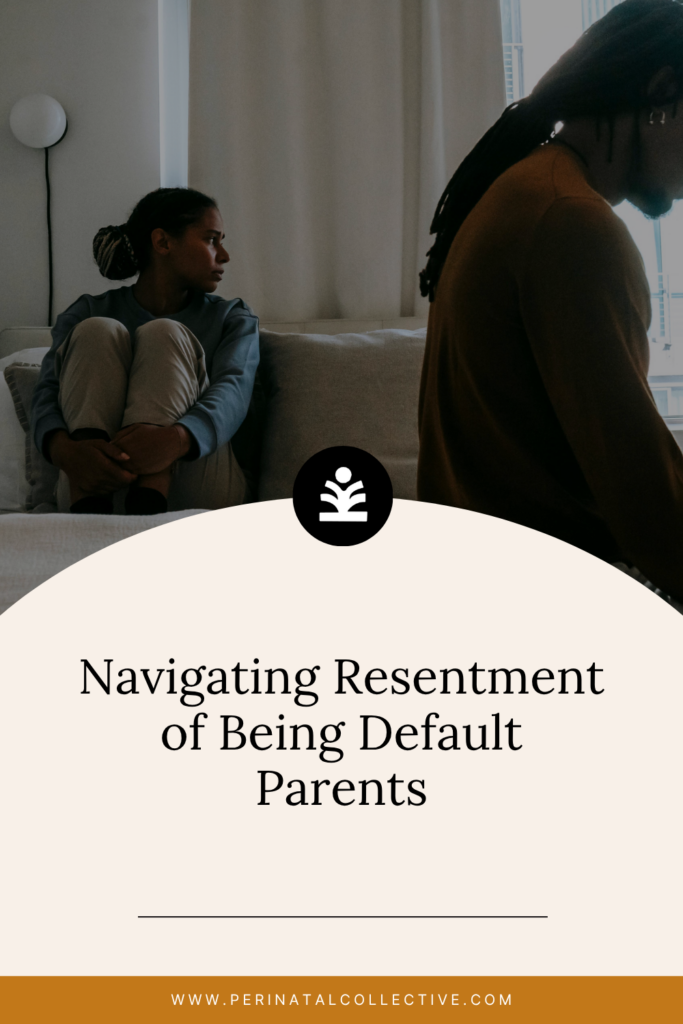
What Is The “Default Parent”?
The default parent is the caregiver who is automatically relied on for much of the day-to-day childcare, logistics, decision-making, and emotional support within a family. They often carry both the visible work of parenting and a large share of the invisible mental load behind it.
Being the default parent is about more than doing the tasks. It’s also about being the person who notices that a task exists in the first place.
They remember the permission slip, the snack day, the next shoe size, the medical appointment, and the fact that a child who loved bananas last week suddenly refuses to eat them. They know when the dish soap is running out and what needs to be packed for daycare. Schools or medical offices may contact them first. During a meltdown or bedtime struggle, they may automatically become the person everyone looks to.
That ongoing awareness can make it feel as though your brain is rarely fully off duty.
Emotional labour can also be part of the default parent role: noticing how everyone is feeling, anticipating emotional needs, and helping the family navigate hard moments. It might mean knowing when a child needs reassurance, helping everyone regulate during a stressful morning, or thinking ahead about how to approach a difficult conversation. This work can be hard to see or quantify, but exhausting when one person consistently carries more of it.
This is why an apparently equal division of chores doesn’t always mean the responsibility itself is shared equally. Two parents might divide visible tasks fairly evenly while one person still carries most of the remembering, anticipating, planning, and delegating.
When one parent regularly has to tell the other what needs doing, they are still managing the work. The alternative to a default parent is shared ownership, rather than one parent carrying the responsibility and the other stepping in to help.
Certain experiences can make someone more likely to fall into the default parent role. This may include identifying as a woman or mother within a family influenced by traditional gender roles, growing up in a household where mothers carried most of the parenting and domestic work, or having a partner who grew up with that model.
Guilt or anxiety about prioritizing your own needs can also make it easier to slip into the default parent role. The same can be true of people-pleasing, perfectionism, or difficulty communicating needs and expectations. If you feel responsible for making sure everything gets done, or gets done a particular way, you may find yourself taking over more and more rather than sharing ownership.
How This Dynamic Happens
Default parenting often develops without either parent consciously choosing or agreeing to the role. It develops over time through a series of practical decisions that may have made sense when they were first made.
Parental leave, feeding roles, and work schedules can all shape the early division of labour. If one parent spends more time at home with a new baby, they naturally get more practice with naps, feeding, appointments, daycare, and daily routines.
That practice can create an expertise gap, and over time, the expertise gap can become a responsibility gap. The more one parent does, the more practiced they become. The more practiced they become, the more likely everyone is to default to them.
A temporary arrangement can eventually start to feel like the permanent way the family operates, even after the circumstances that created it have changed. Over time, one parent becomes the person who knows, notices, remembers, anticipates, and manages more and more, including what needs to happen and what everyone needs from them.
If you’re the default parent, you may eventually find yourself wondering, How did I get here? Often, the answer isn’t one big decision. It’s a pattern that took shape little by little.
These patterns can become ingrained quickly. One parent holds more and more of the operational details of the household, which can also make it harder for the other parent to step in without asking questions or needing direction.
There can be another layer to this dynamic as well. The default parent may understandably feel frustrated about carrying too much while also finding it difficult to relinquish control over how things get done.
If one person routinely steps in, corrects, reminds, anticipates consequences, or thinks, “It’s easier if I just do it,” the other parent has fewer opportunities to develop their own competence and ownership. Sharing the load can also mean accepting that another capable adult may complete a task differently.
There can be more than one effective way to get something done. When there is only one acceptable way to complete a task, it becomes difficult for two people to fully own it.
The default parent role can develop unintentionally, but changing the pattern usually takes some intention.
Why Default Parent Resentment Builds Over Time
Default parent resentment often builds gradually. It can grow when one person consistently carries more responsibility without enough support or opportunities to have their own needs considered. Over time, unequal parenting responsibilities can leave someone feeling like, I do everything as a mom or Why am I responsible for everything in our family?
This can be especially difficult when both parents have paid jobs but only one comes home to what feels like a second shift. One person’s workday ends or changes gears, while the other is still managing childcare, household responsibilities, schedules, and the mental load of parenting underneath all of it.
The strain often comes from balancing work and parenting while also feeling responsible for keeping track of what the other parent needs to do. This is part of why some parents describe feeling like a single parent even though they’re married or partnered.
Invisible labour can make this imbalance particularly frustrating because so much of the work goes unnoticed. Resentment may not actually be about who washed the dishes. It may be about who noticed the dishes, figured out dinner, remembered tomorrow is pajama day, checked whether the child needs new shoes, and kept track of what needs to happen the next morning.
This is why hearing your partner say, “Just tell me what you need,” can feel frustrating when you’re already overloaded. If you find yourself wondering, Why do I always have to ask my partner to help?, this may be part of it. Having to notice what needs to be done, remember it, and then ask your partner to do it means you’re still managing the work.
This can create what educator Laura Danger calls the “Nag Paradox.” The default parent is expected to notice, delegate, and follow up on what needs to happen, but may then be criticized for reminding or “nagging.” They’re left managing the work while also being blamed for managing it.
Resentment and anger can also point toward needs that have gone unmet for a long time. For a default parent, their own rest, time, interests, or needs may repeatedly come after everyone else’s. Carrying the mental and emotional load of motherhood or parenting alongside a lack of appreciation can eventually contribute to default parent burnout and relationship strain.
The default parent wants a partner who owns the work, not one who waits to be assigned it.
How Resentment Can Show Up
Default parent resentment can show up in ways that feel surprising, especially when you love your family and care about your relationship. Love, frustration, exhaustion, and resentment can exist at the same time.
You might notice that you:
- Feel constantly “on” and unable to fully relax, even when someone else is technically in charge.
- Snap over something small because it is the hundredth thing you’ve had to notice or manage that day.
- Feel irritated when your partner asks what needs to be done rather than noticing it themselves.
- Keep score in your head about who has done what, who gets more downtime, or whose needs seem to come first.
- Feel jealous or resentful when your partner rests, exercises, socializes, or leaves the house without having to coordinate everything first.
- Think, “It would be easier if I just did it myself,” while also feeling angry that you have to do it yourself.
- Feel as though you are managing your partner rather than parenting alongside them.
- Have less patience or interest in connection because you feel depleted or unsupported.
- Feel burned out from being the person everyone relies on while struggling to identify who you can rely on.
- Fantasize about being alone, not necessarily because you don’t love your family, but because being alone sounds like a break from having someone need something from you.
You can love your family immensely while also recognizing that the way responsibility is currently distributed is taking a toll.
How to Deal With Default Parent Resentment
Before addressing the resentment itself, it can be useful to understand how the default parent dynamic developed. Often, nobody consciously decided that one person would become responsible for most things. The pattern emerged gradually.
Parental leave, breastfeeding or other feeding roles, work schedules, and time at home can give one parent more experience with the day-to-day work of caring for a baby. They learn the routines, know what goes in the diaper bag, remember appointments, anticipate the next nap, and become the person everyone turns to.
Over time, that difference in experience can become a difference in ownership. One parent becomes increasingly competent because they are doing more, while the other gets fewer opportunities to build the same confidence. The default parent may also start stepping in because it feels faster or easier, reinforcing the pattern without intending to.
Gender expectations can add another layer. In heterosexual relationships, mothers are often expected to anticipate children’s needs, manage household details, and carry more of the emotional and mental labour of family life. This can happen even when both parents work and the visible tasks appear fairly equal.
Bedtime, for example, might be divided evenly while one person remains responsible for noticing the toothpaste is running out, booking the dentist appointment, buying the next size of pajamas, communicating with daycare, and researching summer camp.
Burnout can come from both the number of tasks someone completes and the ongoing responsibility of thinking about what needs to happen next.
Fairness can look different in every family. Rather than requiring a perfect 50/50 split, it can mean treating both people’s time as valuable and sharing responsibility without one parent having to manage or delegate the work.
One meaningful shift is moving from “How can I help?” toward “What am I fully responsible for?” Shared responsibility involves ownership of the whole task, including noticing, planning, remembering, and following through.
When Resentment Starts Affecting Your Relationship
When the default parent dynamic continues over time, resentment can start to change how you experience your partner. You may feel more irritable, critical, disconnected, or less interested in affection and intimacy.
We talk to so many clients who admit they’ve found themselves Googling some version of, “Why do I hate my husband?” or “Why am I so annoyed with my husband after having a baby?” They may not actually hate their partner. Often, they’re trying to make sense of how someone they love has also become the person they feel the most frustrated or resentful toward.
Underneath some of that frustration may be a need to know that your partner sees how much you are carrying and that you can rely on them.
A difficult cycle can develop when one partner overfunctions and becomes increasingly resentful while the other feels criticized or micromanaged and begins to withdraw. The more one person takes over, the less capable the other may feel. The more the other person withdraws, the more the default parent may feel that taking over is necessary.
You may notice resentment affecting your relationship if you are frequently irritated with your partner, mentally keeping score, or feeling more like their manager than their equal. You might assume they won’t notice, remember, or follow through unless you intervene.
You may also feel angry when your partner rests or takes time for themselves, become more critical or sarcastic, or notice less interest in affection, playfulness, physical connection, or sexual intimacy.
Sometimes people stop asking for what they need because they no longer believe anything will change. They may fantasize about how much easier life would feel if they only had themselves to manage or feel lonely despite having a partner. Conversations about parenting and responsibilities may repeatedly turn into the same unresolved conflict.
At that point, it can become harder to experience your partner as someone on your team rather than another person you have to manage.
When You Might Need More Support
Getting support doesn’t have to be reserved for a relationship in crisis. Couples counselling or individual therapy can offer space to understand how the default parent dynamic developed, address resentment, and work toward a more sustainable way of sharing responsibility.
Individual therapy can also be useful when the problem feels relational. It can provide space to understand your resentment, identify and communicate your needs, work with guilt or perfectionism, set clearer boundaries, and explore places where you may be overfunctioning or finding it difficult to let go of control.
One person cannot single-handedly create an equal partnership. At the same time, it is possible to examine your own role in an established pattern and become clearer about what you need from your relationship.
Awareness can be an important first step. Once the pattern becomes visible, there is more opportunity to change it. Intentional conversations, clearer boundaries, redistribution of responsibility, and additional support can help the emotional and practical load shift over time.
The goal is to create a family system where responsibility feels shared, sustainable, and supportive for everyone.
As Eve Rodsky writes, “No matter how many years you’ve been together or how firmly entrenched your patterns or dynamics are, there is always the possibility of change.”





+ show Comments
- Hide Comments
add a comment